Skip to content

Customer Success Story with the University of Prince Edward Island

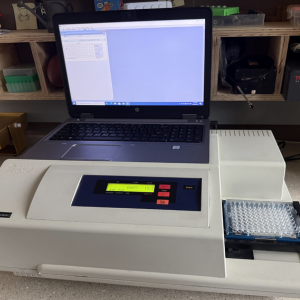
Springer Lab at UPEI uses a double monochromating spectrophotometer to analyze samples from click beetles.

The Research Challenge

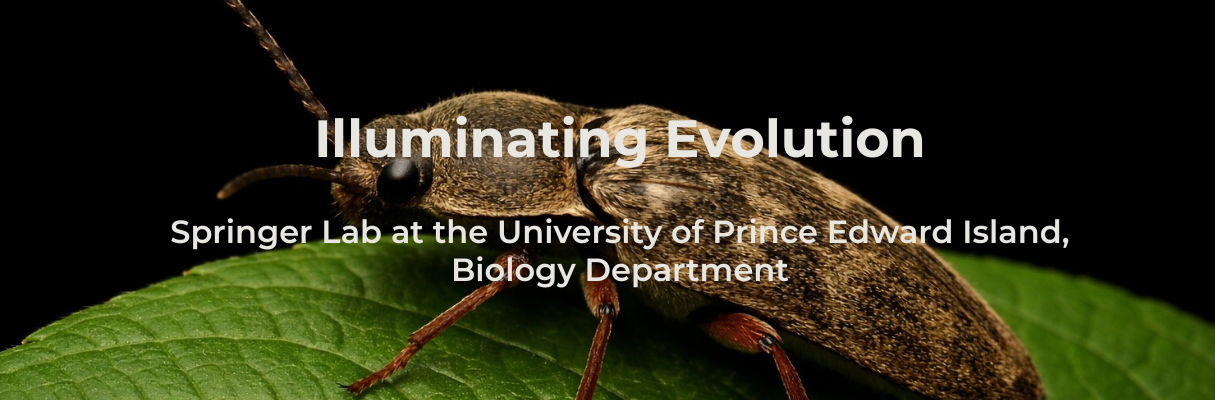
In the Springer Lab at the University of Prince Edward Island, researchers study the range of changes available to organisms as they evolve. One powerful system for exploring these questions is the bioluminescence of click beetles.

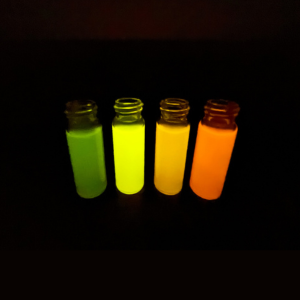
Click beetles naturally glow in one of four colours—green, yellow-green, yellow, or orange. Each colour is produced by a specific variant of the beetle luciferase gene. hile these colour differences are easy to see, accurately measuring and comparing them at a molecular level is far more challenging. Subtle shifts caused by single genetic mutations require highly specialized instrumentation to quantify reliably.

To move their research forward, the Springer Lab needed a solution that could detect and measure extremely small colour differences with high precision.

 
Fluorescent chemical samples glowing under during laboratory analysis.

The Bedrock Scientific Solution

Bedrock Scientific worked closely with the Springer Lab to identify a double monochromating spectrophotometer tailored to their research needs.

This instrument provides the sensitivity and spectral resolution required to quantify tiny shifts in light emission caused by single luciferase mutations. With this new capability, the lab can now generate high-quality, reproducible spectral data that was previously out of reach.

A double monochromating spectrophotometer used for the detection of fluorescence.

New Capabilities Unlocked

With their new spectrophotometer in place, the Springer Lab can now:

  • Quantify natural luciferase variants corresponding to the four known beetle glow colours

  • Scan large libraries of engineered luciferase mutations, mapping the full range of colour changes available through mutation

  • Compare natural alleles and mutational pathways, revealing how evolution actually navigated this space

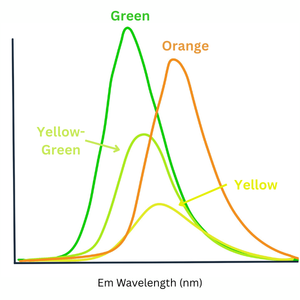
Their first datasets clearly resolved the four natural luciferase alleles—providing immediate validation of the system’s performance.

FTIR spectrum showing the different colours making up a click beatle fluorescence.

Scientific Impact

This work allows the Springer Lab to compare two complementary views of evolution:

  • What could happen: the full space of colour changes accessible through mutation

  • What did happen: the specific evolutionary paths that produced today’s naturally glowing beetles

By comparing these spaces, the lab can test adaptive hypotheses, identify evolutionary constraints, and better understand how new traits emerge over time.

A Collaborative Success

By helping the Springer Lab select the right instrument for their research goals, Bedrock Scientific enabled a major expansion of their experimental capabilities. This partnership highlights the impact that thoughtful instrumentation choices can have on fundamental biological discovery.

We are proud to support the Springer Lab’s work and excited to see how their research continues to shed light on the mechanisms of evolution.

"The team at Bedrock helped us select an instrument that met our technical needs and fit within our budget. Over the past year, the spectrophotometer has proven to be a reliable workhorse in our lab."

University of Prince Edward Island Crest
Dr. Stevan Springer
Associate Professor